
In the design and construction industry, one truth becomes apparent early: no single individual excels at everything, and those who claim otherwise should be challenged.
Over time, I made a deliberate decision to focus on what I do best: designing and engineering complex, people-centered environments that demand deep expertise and disciplined thinking. At Plunkett Raysich Architects, we’ve been refining that focus for more than 90 years. That consistency has not only strengthened our craft but also enabled us to build enduring relationships with the right Construction partners.
The strongest projects are never the result of one entity attempting to do it all. They are the outcome of aligned professionals, each operating at a high level within their respective role.
That has consistently been my experience working alongside one of our general contractor partners, Catalyst Construction.
Designing with Purpose
My work has largely centered on senior living and residential environments, not because it is trending, but because it carries real consequence. How and where people live & work, particularly as they age, matters.
Early in my career, I recognized that I did not want to design buildings disconnected from human impact. Residential communities, senior living facilities, and care environments are not abstract exercises, they are places where people live, work, age, and, in many cases, spend the most meaningful chapters of their lives whether your young or old.
That responsibility fundamentally shapes how you approach design.
It is not simply about aesthetics. It is about delivering environments rooted in life, dignity, care, and respect, spaces that support people across all stages. From a strategic standpoint, good design must respond to both functional needs and the built environment.
A Partnership, Not Transaction
We work with a range of contractors, and that diversity is essential. No architect should be exclusively tied to one builder, nor should any builder rely solely on one architect. The strength lies in selecting the right collaboration for the right reasons.
That said, Trusted Relationships Matter.
With Catalyst, there is a level of professional trust built over time. It is not predicated on agreement, but on clarity of intent and the ability to engage in direct, constructive dialogue. The willingness to have difficult conversations without compromising standards is where real value is created. Catalyst leads with purpose.
At its core, every successful project operates as a three-legged stool: the owner, the architect, and the contractor. If any one of those elements underperforms, or works at cross purposes, the outcome suffers.
What Defines a Strong Partner
In evaluating any construction partner, three qualities remain consistent:
- Expertise: A demonstrated command of their discipline. Be an Expert.
- Engagement: Consistent presence, attention to detail, and accountability. Be Present.
- Alignment: Grounded Decisions- Be Mission/Goal Driven
If any one of these is lacking, performance degrades.
What distinguishes Catalyst is their approach to preconstruction. They engage early and with intention, investing the time to understand a project at a deeper level, stress-testing ideas, and helping owners and designers make informed, cost-conscious decisions.
That level of involvement is not universal, and it materially improves outcomes.
Projects vary widely in scope and intent. Some are design-forward, high-end developments; others are mission-driven and budget-sensitive. The ability to calibrate solutions appropriately and align with the project’s mission.
Timing and Collaboration
A common question I am asked is when to involve the contractor in the process.
The answer is: early, but not blindly.
Bringing a contractor in too late introduces inefficiencies. Bringing them in too early, without sufficient design & definition, can dilute value or informed decisions. The optimal approach is a collaborative model where design and construction inform one another in real time at the right time.
This is an area where our work with Catalyst has been particularly effective. Feedback on cost, constructability, sequencing, and feasibility occurs continuously, allowing for more informed decision-making throughout the process.
That is where meaningful value is realized, not just in the final product, but in how the project evolves.
When It Matters Most
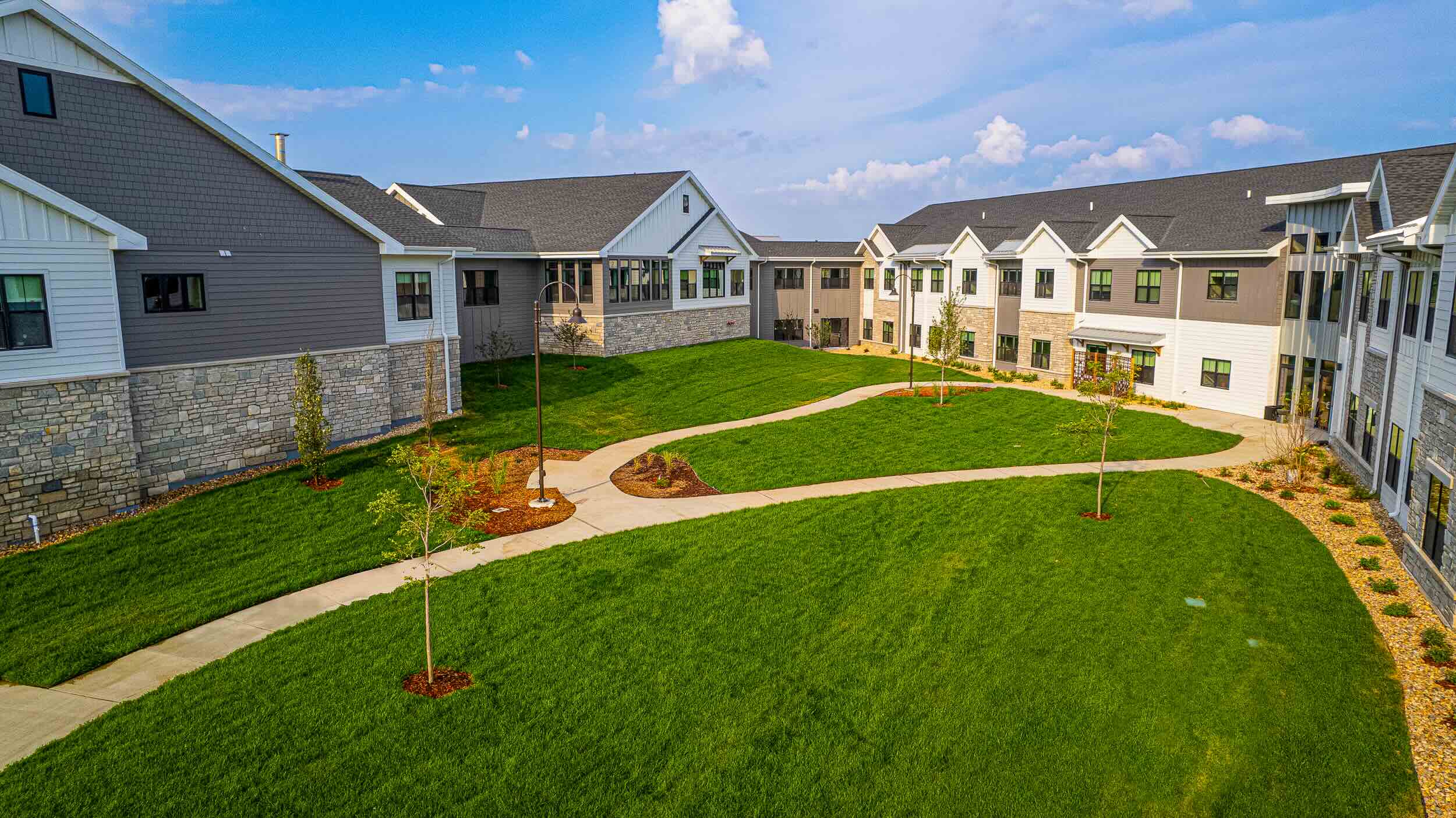
One project that exemplifies this approach is the Village of Harmony Hill in South Dakota, a senior living community where timing, sequencing, and mission were paramount.
The organization needed to transition Sisters and residents, aging members of their community, into a safe, supportive environment without delay. There was little tolerance for inefficiency.
What defined the project was not simply its timeline, but its purpose. This was not trend-driven development; it was mission-driven, focused on supporting the physical, emotional, and spiritual well-being of the benedictine sisters, residents, and the broader community.
Our team and Catalyst aligned quickly, establishing momentum within days. Having a partner capable of moving decisively, providing clarity, and maintaining focus made a measurable difference.
The project was delivered on time and on budget, but more importantly, it was delivered on with mission.
Learn more about Plunkett Raysich Architects, LLP (PRA).
The Reality of the Work
Construction is inherently complex, and architectural design is not instantaneous.
Disagreement is inevitable. The critical factor is how it is managed and when.
Strong partnerships are defined by the ability to listen, adapt, and remain aligned with the client’s objectives. Ego has no place in effective problem-solving. The teams that succeed are those that prioritize outcomes over individual positions.
The Bigger Picture
At its foundation, every project is an act of service, guided by clearly defined roles and a shared responsibility to deliver excellence.
Some projects demand innovation and high design; others require restraint, efficiency, and practicality. Every project serves a purpose, and the most successful outcomes are those that remain aligned with a purpose from start to finish.
This is a responsibility we take seriously, and one we expect in the construction partners we work with.
Final Thoughts
My advice for anyone embarking on any project, this guidance is straight forward in the selection of your architect and contractor, demand them to:
- Be an expert in their discipline.
- Be present, stay engaged, be proactive throughout the process.
- Remain aligned with the guiding mission, vision and values, without deviation.
These are the qualities we have consistently experienced in our work with Catalyst.
They bring expertise, remain fully engaged, and make decisions aligned with the broader success of the project, not just an individual scope. It takes a team.
Because ultimately, success is measured by one outcome: getting it right.
About the Author