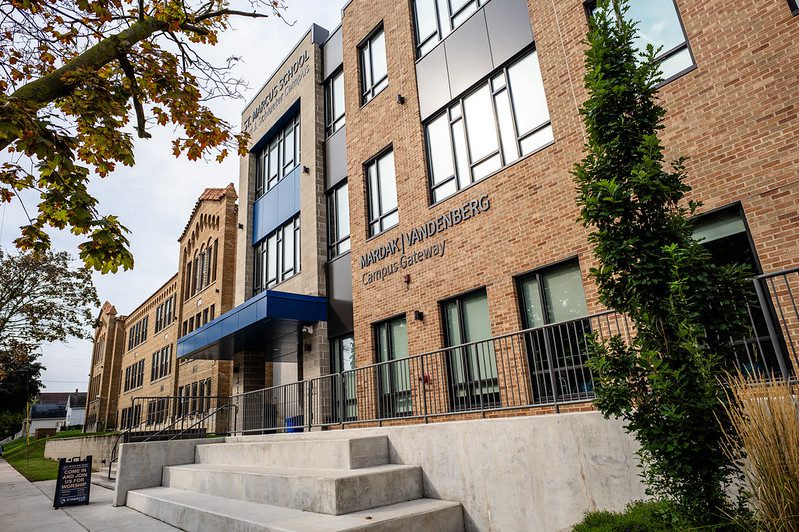

In every community we serve, buildings do more than hold people. They hold purpose. Hospitals care, churches uplift, schools educate, and arts organizations inspire.
How that mission takes form depends heavily on the project delivery method. For many owners, especially those new to construction, the difference between design-build and an Architect-Engineer Construction Management (AECM) partnership is not always clear. Familiarity and industry norms often guide the decision long before the nuances of each approach are fully understood.
At Catalyst Construction, we approach projects with stewardship and collaboration at the center. We believe the design and construction process should honor the owner’s priorities, while allowing for creativity and budget control. That commitment is why we take time to explain the available delivery models and how each one aligns with an owner’s goals, values, and long-term vision.
Understanding the Design Build Model
Design-build brings design and construction under one firm, with the architect and builder working within a single contract. This structure creates a simplified, consolidated path for owners and establishes a single point of accountability throughout the project.
For some projects, design-build works well. It is particularly effective for projects that are repetitive, follow established layouts, or prioritize speed. This model emphasizes a singular team for scheduling, project coordination, and communication.
Because one team manages both design and construction, design-build can be a solution when the project scope is well-defined and customization needs are limited.
Supporting Unique Design Goals
Many of the clients Catalyst serves are mission-driven organizations whose buildings represent identity, values, and community. Spaces for worship, healing, learning, and the arts often require flexibility and innovative program space.
Therefore, when owners prioritize design, they find that the design-build model can feel more constrained. While architectural services are still a critical part of the process, they are typically delivered within a framework designed to maximize flexibility, creativity, and efficiency.
On most projects, churches, medical providers, schools, and nonprofit organizations value an architect who can fully advocate for their design vision, in collaboration with a construction partner who provides independent, experienced guidance focused on constructability, cost, and long-term performance.
When owners seek greater creative freedom and a more collaborative balance of expertise, an alternative approach is a better fit.
The Strength of an AECM Partnership
AECM is a model where the owner holds separate contracts with the architect and the construction manager, creating a structure where each party brings focused expertise to the project.
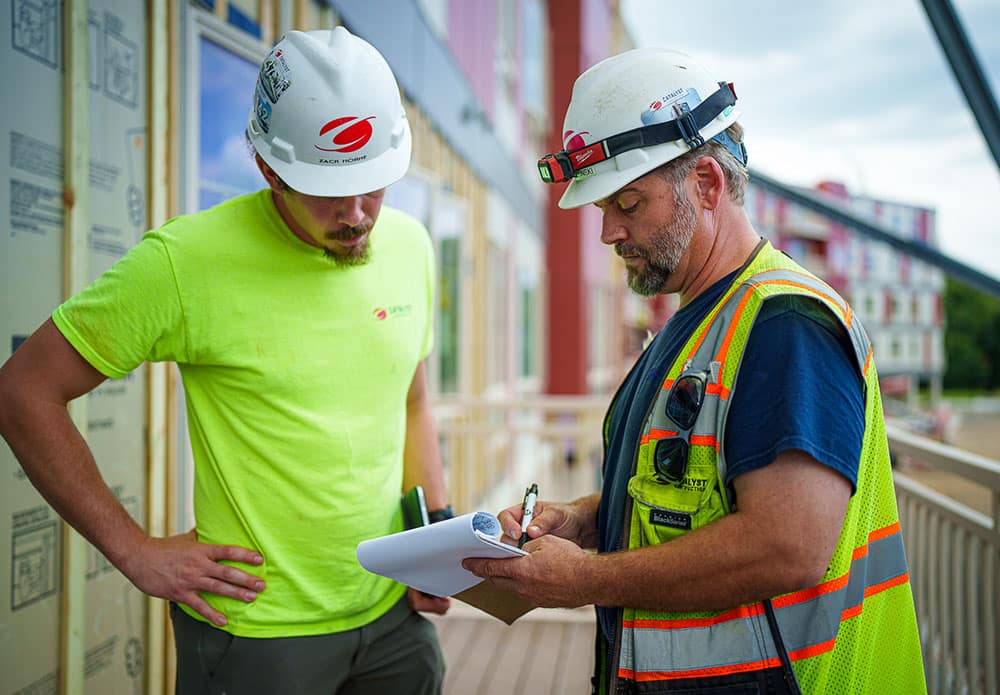
The architect is free to concentrate fully on shaping the design, while the construction firm engages early to provide insight that supports informed decision-making. This includes evaluating feasibility, identifying potential risks, and offering cost guidance long before construction begins.
From an owner’s perspective, AECM offers several practical benefits:
- Cost clarity: Early budgeting and continuous cost feedback reduce surprises later in the process.
- Early feasibility: Design ideas are evaluated alongside real-world construction considerations from the start.
- Risk reduction: Potential challenges are identified sooner, when solutions are more flexible and cost-effective.
This collaborative structure fosters transparency and balance. Architects have room to explore thoughtful, mission-aligned solutions, while the construction manager helps ensure those ideas are practical, achievable, and financially responsible.
Catalyst’s business model is built on AECM partnership. We believe AECM best serves the client’s interests. Having two professional firms brings independent expertise with the primary goal of maximizing value to the client.
A Simple Comparison: Which Model Is the Best Fit?
While every project is unique, the following considerations can help owners determine which approach may best support their goals:
Design-Build may be a strong fit when:
- The project is repetitive or follows a standard layout
- Simplicity is a top priority
- The scope is clearly defined with limited customization
AECM may be a strong fit when:
- The project requires a high level of design creativity or customization
- Early cost clarity and risk management are important
- The owner values independent guidance and collaborative decision-making
Understanding these distinctions empowers owners to choose a delivery method that aligns with both their practical needs and their broader mission.
About the Author