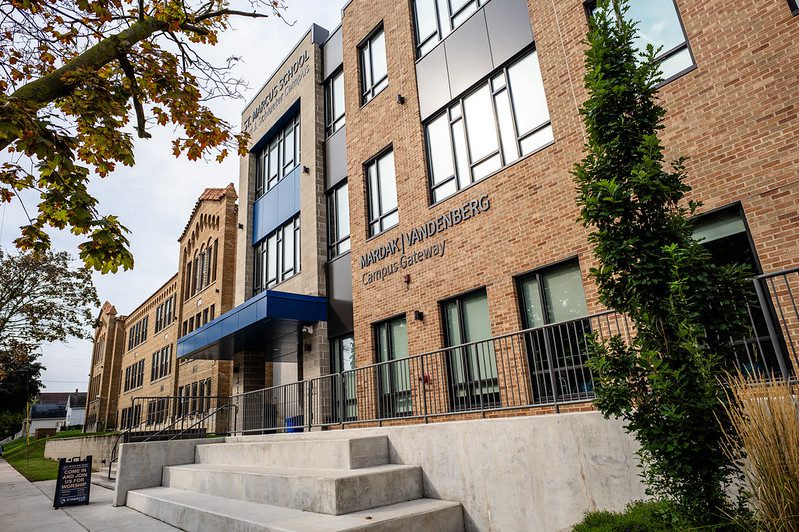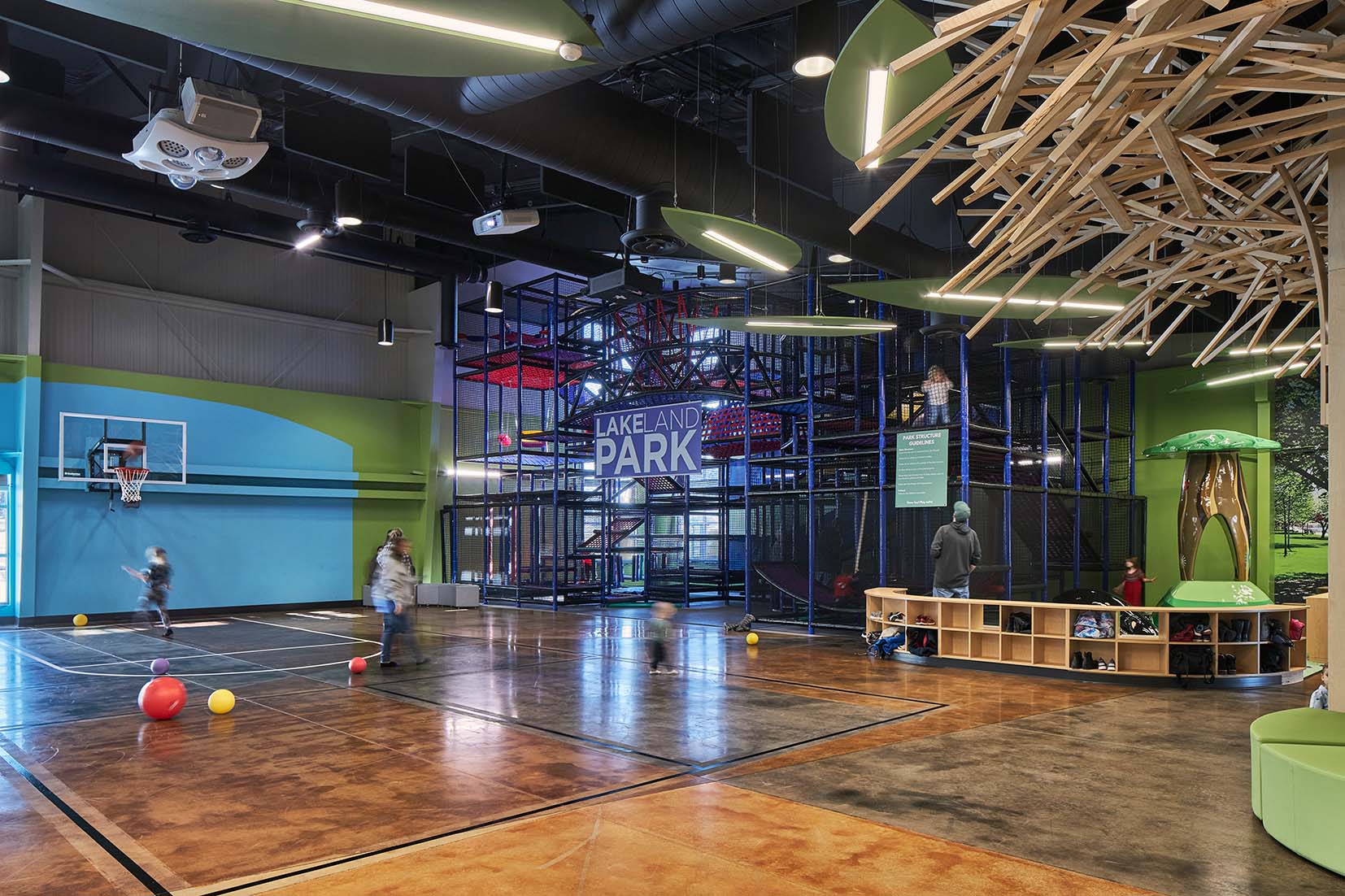

A church playground can support community outreach by giving local families a useful, low-pressure reason to visit throughout the week. Indoor and outdoor play spaces can help churches meet parents and children where they are, build relationships over repeated visits and use their facilities for ministry beyond Sunday morning.
When we think about mission work, our minds often go somewhere far away. We picture people boarding planes, traveling across the country or around the world, and stepping into communities where there is an opportunity to serve and share their faith.
That work matters. But what if one of your church’s greatest mission fields is much closer to home?
It might be the family living a few blocks away. The parent looking for somewhere to take their kids on a cold Wisconsin morning. A family that hasn’t attended church in years but would gladly bring their children somewhere safe to play. It could be someone who isn’t ready to walk through your doors for a worship service but would walk through them for something their family needs.
For churches thinking about their facilities and how to maximize their impact, that presents an interesting opportunity. Sometimes, something as simple as a playground can become much more than a place for kids to play. It can become an open door to your community.
How an Indoor Church Playground Opens the Doors to Local Families
At Catalyst Construction, we talk often with churches about designing buildings that support ministry beyond Sunday morning. A church building is a significant investment, and when thoughtfully planned, it can become a resource that serves both the congregation and the surrounding community throughout the week.
Lakeland Community Church in Lake Geneva, Wisconsin, is a great example of what that can look like.
When Lakeland created its indoor play space, it wasn’t simply about adding something fun for children who already attended the church. The space created another way for the church to connect with families throughout its community. In a previous conversation with Catalyst, Lakeland shared that approximately 75% of the people coming through its doors during the week were not regular churchgoers or were not connected to a church.
That number tells a much bigger story than playground utilization.
Families who might never have considered attending a Sunday service suddenly had a reason to enter the building. They could bring their children somewhere safe to play, spend time with other parents and experience the church in an approachable environment. There was no expectation that they needed to know how a service worked, what to wear or even what they believed before they came inside.
The playground helped remove a barrier.
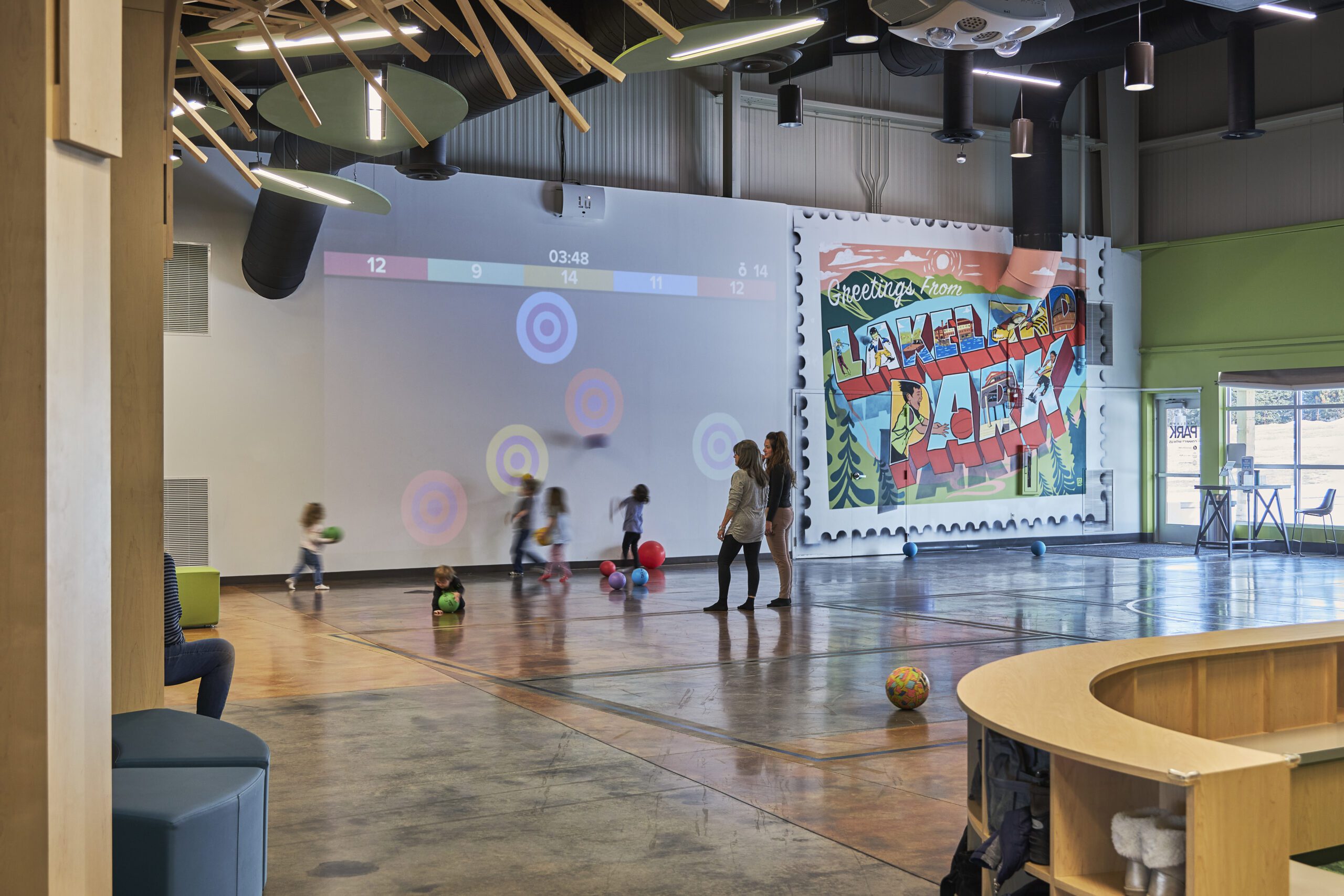
Catalyst has seen the impact of Lakeland’s investment continue to grow. The church transformed its former worship space into a public children’s area that has attracted tens of thousands of visitors and helped expand its connection to the surrounding community. The space demonstrates what can happen when a church begins looking at its facility not only in terms of what its congregation needs, but also through the lens of the people it hopes to reach.
How Play Spaces Can Make Churches More Approachable
For someone who hasn’t attended church before, or hasn’t attended in a long time, walking into a worship service can feel intimidating. Churches can be incredibly welcoming and still have barriers that longtime members may not recognize.
A playground changes the nature of that first interaction. Parents understand playgrounds. Kids certainly understand playgrounds. Instead of asking someone to begin by participating in something unfamiliar, the church meets a need that already exists in that person’s life.
That philosophy extends beyond Lakeland.
At Evolve Church in Milwaukee, Catalyst helped transform a former furniture store into a church facility intentionally designed to serve the surrounding community. The space includes a free indoor park as part of a larger vision for a building that provides resources and opportunities for people throughout the neighborhood.
In both cases, the physical space supports something much larger. The building isn’t simply waiting for people to come to church on Sunday. It gives the church opportunities to be present in people’s lives throughout the rest of the week.
That is an important distinction when churches begin planning construction projects. Rather than starting with, “What should we build?” the better question may be, “Who are we trying to serve, and what do they need?”
Looking Beyond Sunday Morning
Church construction naturally involves conversations about worship capacity, classrooms, children’s ministry, offices, parking and gathering areas. Those spaces are important, but there is also an opportunity to think about what happens inside and around the building Monday through Saturday.
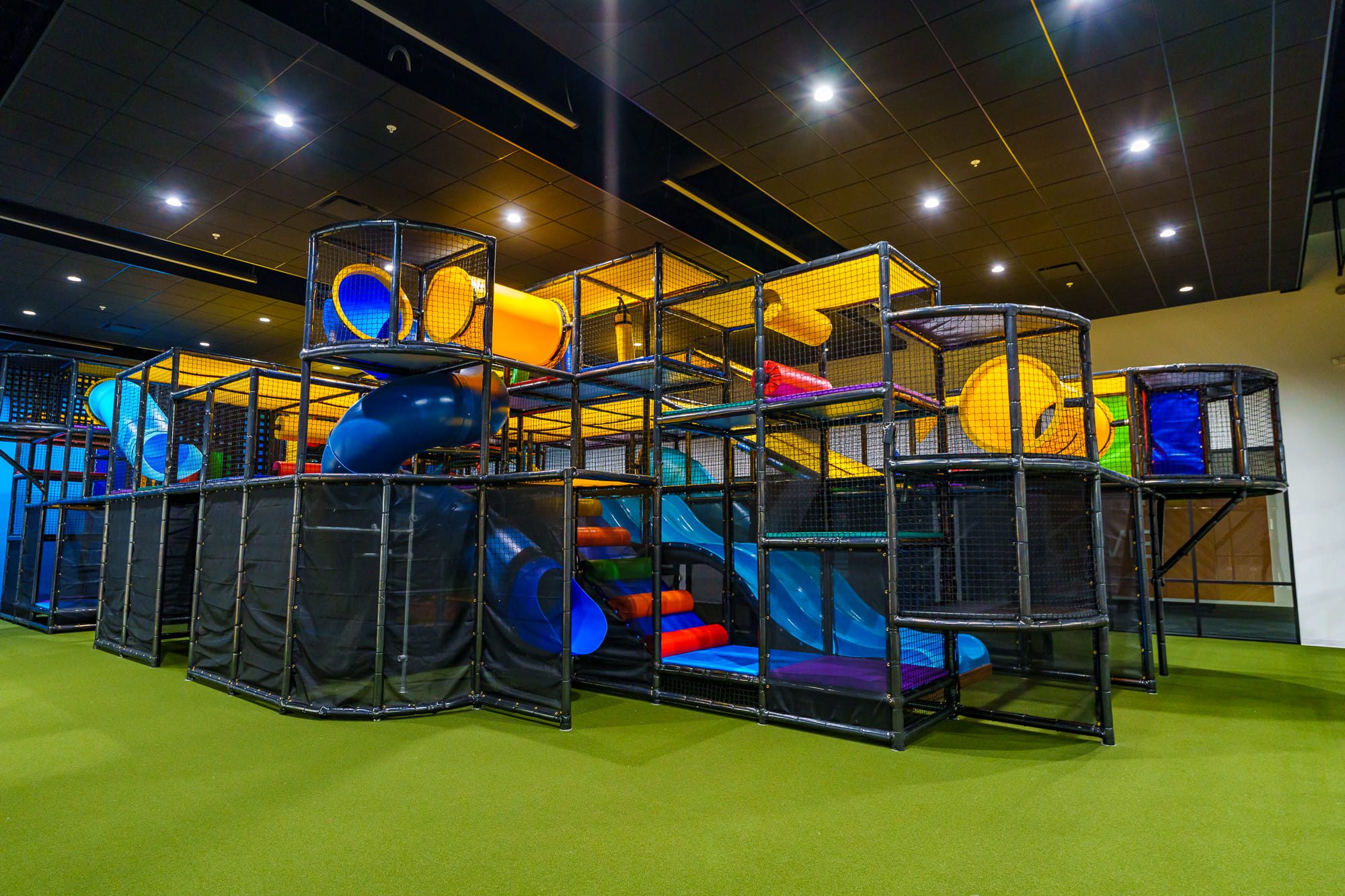
Could an indoor playground become a gathering place for young families during the winter? Could an outdoor play area give neighborhood families a reason to spend time on church property? Could a café, walking path, community room or recreation space create connections with people who aren’t currently part of the congregation?
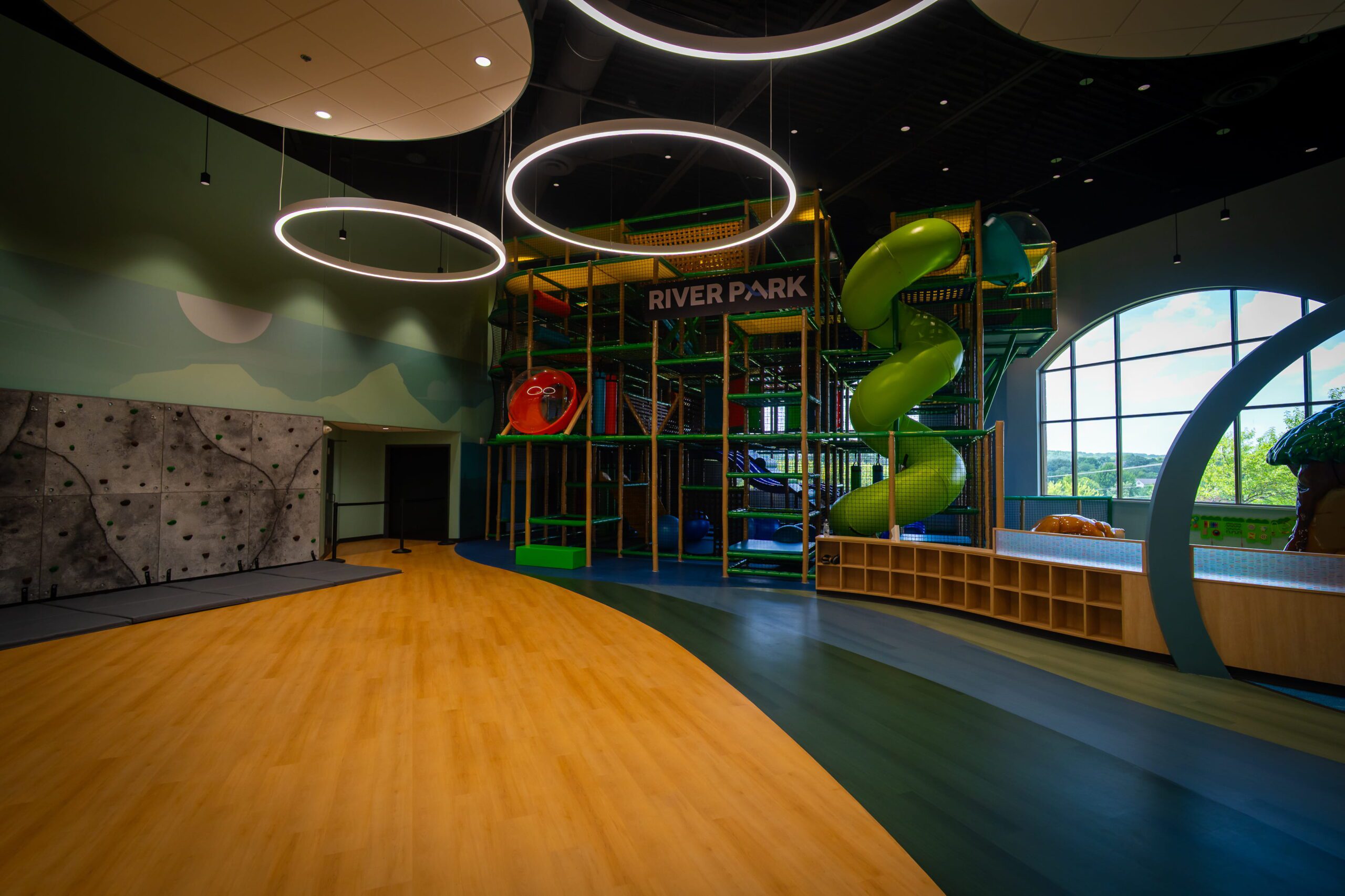
RiverGlen Christian Church’s RiverPark in Waukesha, Wisconsin is another example of thinking differently about how church property can serve people. By creating opportunities for recreation, gathering and play outside of the traditional worship environment, churches can invite their neighbors onto their property in ways that feel natural and accessible.
Those interactions may seem small. A family stops by to play. Two parents start talking. Someone learns about an event happening at the church. A child asks to come back.
Relationships rarely begin with a grand gesture. More often, they begin because people repeatedly find themselves in a place where they feel comfortable, welcomed and cared for.
For churches, creating those places can be an important form of local mission.
Is a Playground Right for Your Church
None of this means every church needs a playground. In fact, that misses the larger point.
Every congregation and every community is different. An indoor playground might be incredibly valuable to a church surrounded by young families, particularly in a climate like Wisconsin where indoor recreation is needed for much of the year. Somewhere else, the greatest opportunity might be a food pantry, community gathering room, counseling space, café, athletic facility or outdoor recreation area.
The goal isn’t to follow a church design trend. It’s to understand the people around you.
Before committing square footage and construction dollars to any community-focused space, churches should spend time learning what their neighbors actually need.
- Who lives within a few miles of the church?
- What resources are missing from the community?
- What would give someone who isn’t currently connected to the church a reason to visit?
- Most importantly, how does that investment connect to the church’s mission?
Those conversations should happen early in the planning and design process because they can significantly influence how a facility takes shape. At Catalyst, we’ve long encouraged churches to approach construction this way: identify the meaningful, missional problem first, and then determine what kind of building solution can help solve it.
Your Mission Field May Be Closer Than You Think
Mission work will continue to take churches across states, countries and oceans, and those efforts remain an important part of how congregations serve others. But mission doesn’t have to begin with a plane ticket.
Sometimes it starts in your own neighborhood.
Lakeland’s experience offers a compelling example. When a significant majority of the people using a church facility during the week aren’t regular churchgoers, the building is doing something important. It’s creating opportunities for relationships with people the congregation might not otherwise meet.
That’s the real opportunity behind a playground.
The slide isn’t the mission. The climbing wall isn’t the mission. Even the building itself isn’t the mission. They’re tools that can help create an open door between a church and its community.
As your church begins considering its next building project, expansion or renovation, don’t only think about how many people your facility needs to seat on Sunday morning. Think about who it could serve the other six days of the week.
Your greatest opportunity for mission might already be right outside your doors.
Building Spaces That Serve Your Mission
At Catalyst Construction, we believe church facilities should be designed around the mission and people they are intended to serve. Whether that means creating an indoor playground, developing outdoor recreation space, expanding children’s ministry or finding new ways for an existing building to serve the community, thoughtful planning can help churches make the most of their facilities and their investment.
Our team works alongside church leaders from the earliest stages of planning through construction to understand where their ministry is headed, who they’re trying to reach and what kind of space can help them get there.
Planning a church construction, expansion or renovation project? Learn more about Catalyst Construction’s approach to creating spaces that support your ministry and serve your community.
Because the goal isn’t simply to build more. It’s to build with purpose.
About the Author